
Meat
Beef and pork
Fresh cuts, portions and pieces to refrigerate or freeze.
For example
- Beef cuts
- Pork
- Deli meats
- Marinated meat
For meat, chicken, fish, cheese and more. Manufacturer in Mexico.
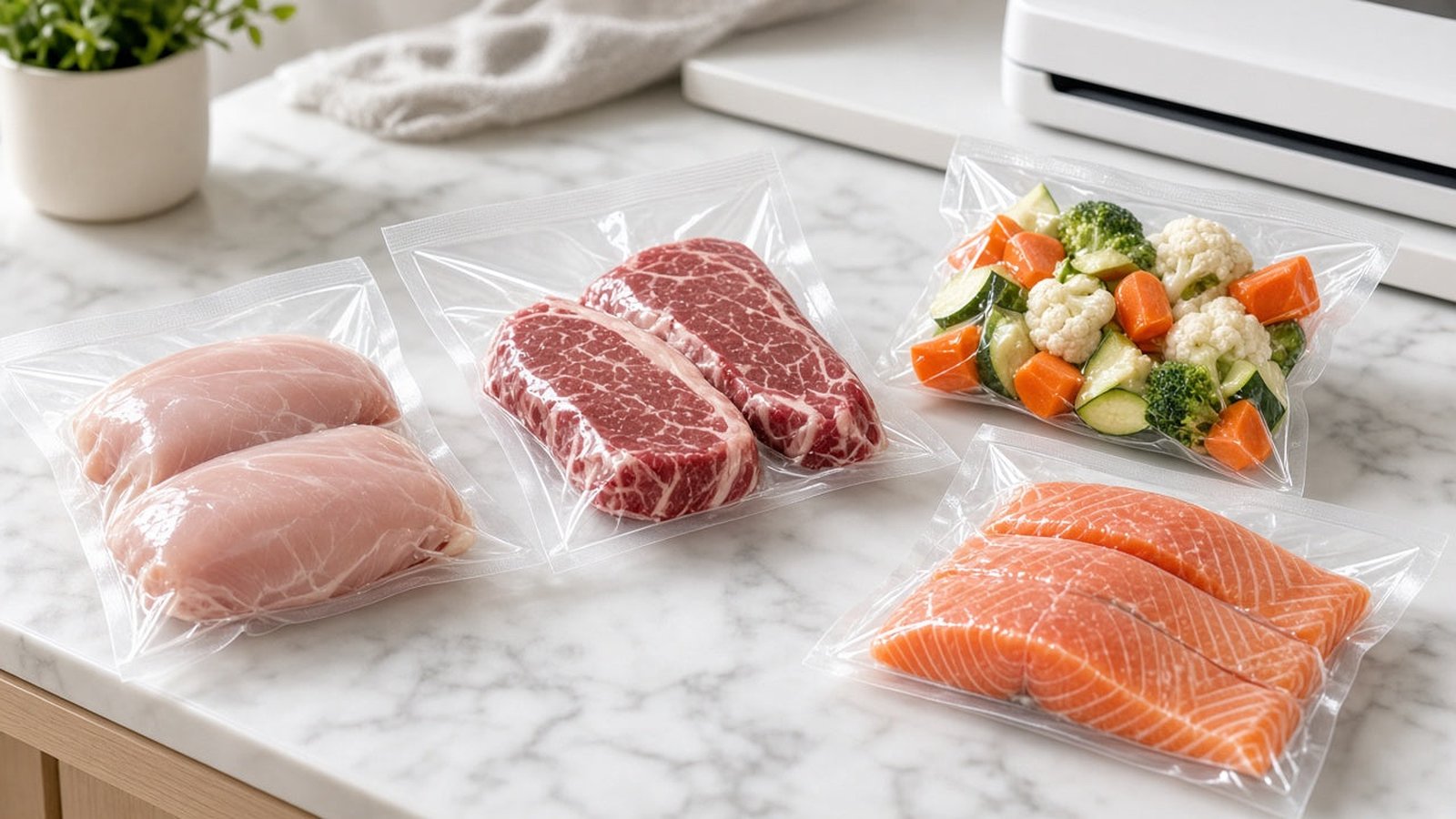

For external tabletop vacuum sealers, we sell embossed bags online: their texture helps air escape more evenly when sealing.
They are used to store meat, cheese, vegetables and prepared food in the refrigerator or freezer. Sizes range from 15×20 to 30×40 cm in packs of 50 and 100, plus 28 cm rolls to cut to size.
This is the bag we manufacture for businesses, quoted on WhatsApp. Its film lets very little oxygen through, so food stays air-free after sealing.
The product goes into the bag clean and cold, with free margin for sealing.
The vacuum machine removes the air and the bag fits tightly around the product.
The machine closes the bag with a heat seal so air cannot get back in.
The barrier film lets very little oxygen through, so the food keeps its quality longer under refrigeration.
Global figure: in 2022, 19% of the food available to consumers was wasted. The right packaging helps food stay fresh and last longer.
Reference shelf life for vacuum-packed fresh beef primal cuts. On a tray with air-permeable film: 3 to 7 days.
Freezer burn happens when air touches the food. Vacuum-packed frozen whole beef cuts: 12 months of recommended life.
Oxygen makes fats go rancid and food change color. Removing it from the package helps preserve flavor and appearance.
Fresh meat is packed in bags that let very little oxygen and moisture through. Without oxygen, the bacteria that spoil it grow much less.
These are general facts about barrier vacuum packaging, not specifications of an Armovac product. Results depend on the food, hygiene and temperature.
In processing plants, butcher shops, fish markets, cheese makers and food service kitchens.
Fresh cuts, portions and pieces to refrigerate or freeze.
Breasts, legs and portions for sale or freezing.
Fillets and portions for sale, distribution or freezing.
For cheese makers, kitchens and food service operations that pack portions.
Is your product not on the list? Tell us what you pack and we help you choose the bag. Ask us on WhatsApp
It is normal: without oxygen, the meat pigment looks purple. When you open the bag and it comes into contact with air, it returns to its bright red.
Vacuum-packed perishable foods must be kept refrigerated or frozen.
It is recommended to thaw inside the refrigerator, not at room temperature.
We offer vacuum packaging machinery that removes the air and seals the bag.
We have approved suppliers and support you every step of the way.
Tell us what food you will pack, the approximate bag size, which vacuum machine you use and your monthly volume. We reply directly on WhatsApp.